Showing posts with label Experimental. Show all posts

Wednesday, November 6, 2013

Stream Ryan Trecartin's Center Jenny through Nov. 8 at Vdrome

Very high on my to-view list is Center Jenny, a new video by Ryan Trecartin, and one of four that he screened at the Venice Biennale.  In fact, I should probably watch it tonight, because it is only streaming on the Vdrome website channel through November 8.

As the Vdrome about page will tell you, Vdrome is "an online platform that offers regular, high quality screenings of films and videos directed by visual artists and filmmakers, whose production lies in-between contemporary art and cinema." You can consult the Vdrome archive for previous artists and films, but the streams themselves are only available for a limited time.

It is difficult to open the Vdrome Vimeo links outside of the Vdrome page itself, and I've not been able to use my previously described technique of using the myPlex Media Queue to watch Vdrome on my television. This seems like a good scenario for using Chromecast to fling the Chrome tab containing the Vdrome video to my television, because while Trecartin's work is driven by an internet sensibility, I don't want to watch it on a computer.

Quite a bit of Trecartin's earlier work is available on UbuWeb, and I feel less guilty about pointing you there in this context because unlike other work on Ubu, Trecartin's work is there with the artist's permission. As you will see Trecartin is quite prolific, and it is difficult to catch up with his work because it can be somewhat exhausting to keep up with his hyperkinetic style. One place to start might be I-BE-AREA from 2007, the first hour of which I think is absolutely brilliant, followed by a second hour that would be just as great if I hadn't been so exhausted by the first.


Center Jenny (Ryan Trecartin, USA, 2013, 53 minutes)

Vdrome: Ryan Trecartin’s movies unfold like futuristic fever dreams. Collaborating with his cast, Trecartin’s layered aesthetic reveals high-definition uncanniness, wherein digital life dynamics and gamesmanship merge with pop culture histrionics and banality. In CENTER JENNY, part of Trecartin’s presentation at the 55th Venice Biennale, his characters continuously evolve towards a post-human realm through reality show hermeneutics, prosumer rhetoric, and collegiate rituals.

Note: After November 8, the Center Jenny links will simply take you to the Vdrome main page.


I-BE-AREA (Ryan Trecartin, USA, 2007, 105 minutes)

UbuWeb, citing Electronic Arts Intermix Catalog: 

Holland Cotter, writing in The New York Times, describes the "sensationally anarchic" video I-Be Area, in which Trecartin uses what Cotter terms "very basic digital tools to create a highly personal narrative art, almost a kind of folk art."

Cotter writes: "We're in a house of many tight, messy rooms. In the suburbs? Cyberspace? Hard to say. Anyway, it's night. A door bangs open. A girl, who is also a boy, dashes in, talking, talking. Other people are already there, in gaudy attire, dire wigs and makeup like paint on de Koonings. Everyone moves in a jerky, speeded-up, look-at-me way and speaks superfast to one another, to the camera, into a cellphone. Phrases whiz by about cloning, family, same-sex adoption, the art world, the end of the world, identity, blogging, the future. Suddenly indoors turns into outdoors, night into day, and we're at a picnic, in dappled sunshine, with a baby. Then this all reverses, and we're indoors again. A goth band is pounding away in the kitchen. The house is under siege. Hysteria. Everyone runs through the walls."

"...For queer artists of Mr. Trecartin's generation, cross-dressing, cross-identifying and cross-thinking are part of a state of being, not statements of political position. Like the work of John Waters and Jack Smith, his art is about just saying no to life as we think we have seen it and saying yes to zanier, virtual-utopian possibilities."


Wednesday, October 30, 2013

Online Shorts: Drums West, Mute, Chocolate Bacon, Agamemnon Counterpart, Solipsist


I plan to highlight online short films as a regular feature, and here are five experimental and animated shorts that I've seen and enjoyed over the past few weeks.

Lately my two favorite resources for online shorts have been Mike Everleth's Underground Film Journal and Amid Amidi and Jerry Beck's Cartoon Brew.  I decided to avoid a Halloween-themed list, but if you're looking for one check out Everleth's "Great Underground Horror Films Streaming For Halloween." Yesterday, Cartoon Brew posted an article about the month-long National Film Board of Canada showcase, Get Animated! Both resources are worth following on their respective Twitter feeds and Facebook pages.

The final selection below, along with six other online experimental titles, can also be found in the Cultural Weekly article, "The New Innovators of Experimental Short Cinema" by Amy Cobb.

I prefer to watch online shorts on my television for a better viewing experience, and Plex and its myPlex media queue has become my go-to resource for collecting any online video for later viewing. I first discovered Plex as an app on my Samsung Blu-Ray Smart Hub, and I use it even more extensively with its channel on the Roku Streaming Device.


The procedure is very simple if you first install the myPlex bookmarklet in your bookmark bar, or add the Chrome myPlex Queue Extension. Simply find a video online, then click the bookmarklet to add it to your myPlex queue.  On pages with multiple videos, you might want to go to the video's source page first to make sure you're queueing the right video.  The videos in your myPlex queue are then available to watch on your television using your Samsung Smart Hub app or Roku Channel. Depending on the quality of the video source, the myPlex image and sound quality is very good (although it can take a little bit of time to access the video in your queue).


"Drums West" cut-paper animation from Jim Henson. This newly rediscovered short was created in Jim's home studio in Bethesda, MD around 1961. It is one of several experimental shorts inspired by the music of jazz great Chico Hamilton. At the end, in footage probably shot by Jerry Juhl, Jim demonstrates his working method.


MUTE from Job, Joris & Marieke on Vimeo.
MUTE is an animated short about a world populated by people born without a mouth. When a gory accident leads to the discovery they are able to create their own mouth by cutting themselves, this releases an enthusiastic chain reaction among the population…

This 4 minute cgi short has been created by Job, Joris & Marieke, a Dutch studio for animation, illustration, character design and music. In 2011 Job, Joris & Marieke made the music video 'I'll take you along' for Dutch rapper Gers Pardoel which has been viewed over 15 million times. The music was made by Happy Camper, and all voices were done by Fresku!

MUTE premiered at the Dutch Film Festival in the Golden Calf competition and was screened at the Anim'est festival in Bucarest. More festival news can be found on the MUTE website

http://jobjorisenmarieke.nl/mute


Chocolate Bacon (2012) from asavari kumar on Vimeo.
SYNOPSIS
Chocolate bacon is a portrait of a young woman’s experiences in the first year of grad school, presented through a series of conversations re-contextualized by abstracted characters. The film is divided into 6 episodes showing slices of life from a 7 month time period and the voices are from real audio recordings. The vignettes are interspersed with pieces where the main character talks more specifically about her trials and tribulations in making the film.

WEB : http://asavarikumar.com/chocolate-bacon/

AWARDS AND SELECTIONS
(Innovation Award) No Budget Film Festival ’12 (CA,US)
(Official selection) Ottawa International Animation Festival ’12 (Ottawa, Canada)
(Official selection) Lone Star Film festival ’12 (TX, US)
(Official selection) BUtiful Film festival ’12 (Bournemouth, UK)
(Official selection) Dirt poor filmmakers festival ’12 (NC, US)
(Official selection) Victoria Film Festival ’13 (Victoria, Canada)
(Official selection) Pune International Film Festival ’13 (Pune,India)
(Official selection) Women and minorities in media Festival ’13 (MD, US)
(Official selection) Fort Myers Film Festival ’13 (FL, US)
(Official selection) Toronto Animation Arts Festival International (Canada, 2013)


Agamemnon Counterpart from Michael Robinson on Vimeo.
Original Recipe (made in 2005):

"In 2571 in the heap of crushed stone among the ruins of that not determined turn blue planet it was found video cassette. The fact that you intend to see, has to it no relation. This is completely different record."

Music and character drawings by Jason Kovac aka Dave From 2001 (D2K1).

Free downloadable video game based on Agamemnon Counterpart created by Jason Baum aka Giz/Gizmonicgamer (PC only)-

fileupyours.com/view/127688/Agamemnoncounterpart_gamezFINASH.rar

Another way to watch:

http://www.yooouuutuuube.com/v/?rows=16&cols=16&id=ZqzESY7SIqU&startZoom=1


Saatchi & Saatchi New Directors' Showcase 2012


Monday, October 28, 2013

Lou Reed (1942-2013): Berlin, Trainspotting, Velvet Goldmine, Red Shirley


Lou Reed passed away yesterday, at age 71.  The ideal tribute would be to showcase his Warhol Screen Tests, but many of those posted online have unfortunate soundtracks added.  No longer streaming on Netflix, but still available on DVD, is 13 Most Beautiful...Songs for Andy Warhol's Screen Tests, which features Reed as well as Paul America, Dennis Hopper, Nico, Edie Sedgwick, Ingrid Superstar and Mary Woronov among others (be sure to watch the tear roll down the cheek of the non-blinking Ann Buchanan).  If you look hard enough, you might even find a copy of Raro Video's DVD of Vinyl and The Velvet Underground and Nico.

There are many official and unofficial streams of Velvet Underground and Lou Reed performances, and one in particular worth pointing out is the Ronald Nameth film Andy Warhol's Exploding Plastic Inevitable with The Velvet Underground on UbuWeb.  And, of course, the first appearance of the Velvet Underground in January, 1966 at the Annual Dinner of the New York Society for Clinical Psychiatry at the Delmonico Hotel is briefly featured in various manifestations of Jonas Mekas's diary films, including Walden: Diaries, Notes, and Sketches and Scenes from the Life of Andy Warhol.

There was a stretch in the late 1990s where Reed's songs appeared in several memorable cinematic moments in narrative features, most notably Trainspotting and Velvet Goldmine, which are currently streaming on Netflix (see below). Perhaps there could have been one more if he had not objected to I Shot Andy Warhol in 1996. He appears as "himself" in at least five feature films: Permanent Record (1988), Faraway, So Close! (1993), Closure (1997), Prozac Nation (2001) and Palermo Shooting (2008). He's credited in Blue in the Face (1995) as "Man with Strange Glasses" and in Lulu on the Bridge (1998) as "Not Lou Reed." He also provides the singing voice for some of Mok's songs in the animated feature Rock and Rule (1983).

I did not realize until surfing the internet tributes to Reed that he directed a 27-minute documentary short, Red Shirley (2010), about his 99-year-old cousin. Red Shirley is currently streaming at SnagFilms.


Jim Healy and the UW-Cinematheque Facebook page posted a memorial link to this collection of Lou Reed's scenes from Get Crazy (1983), which they screened last year.


Posters and Synopses from The Movie Database


Lou Reed's Berlin (Julian Schnabel, USA, 2007, 85 minutes)

Lou Reed recorded the album Berlin in 1973. It was a commercial failure. Over the next 33 years, he never performed the album live. For five nights in December 2006 at St. Ann's Warehouse Brooklyn, Lou Reed performed his masterwork about love's dark sisters: jealousy, rage and loss.


Trainspotting (Danny Boyle, UK, 1996, 93 minutes)

Renton is living the dream and that dream is Heroin. As Renton struggles with the agony and ecstasy of his life we follow him and his increasingly unstable mates. Drinking, fighting, drugs, sex and the most disgusting toilet in Scotland.


Velvet Goldmine (Todd Haynes, USA, 1998, 119 minutes)

In 1984, British newspaper reporter Arthur Stuart is investigating the career of 1970s glam rock star Brian Slade, who was heavily influenced in his early years by American rock singer Curt Wild, whose show was quite crazy for his time.


Monday, October 21, 2013

Madison Film Forum: Museum Hours at MMoCA Spotlight Cinema, Oct. 24

As I continue to develop ideas and content for this site, most posts will be aimed at a more general web audience while some posts will address readers in my hometown, Madison, Wisconsin.  Even when I write about screenings happening here, I will provide information that readers outside of Madison hopefully will find useful.

This post is also an experiment in that the main film discussed isn't actually streaming right now, and instead I provide a link to GoWatchIt, where you can put it in a queue to notify you when it is available on one or more streaming service.  Any feedback regarding this would be greatly appreciated in the comments section.


There will be some appropriate museum hours at the Madison Museum of Contemporary Art for Spotlight Cinema's screening of Jem Cohen's Museum Hours, Thursday, October 24 at 7:00 p.m. Madison viewers might remember Cohen's earlier feature, Chain, at the 2006 Wisconsin Film Festival, which also won Cohen a "Someone to Watch" 2005 Independent Spirit Award.  Cohen's work often focuses on urban landscapes, and Museum Hours is no different as it juxtaposes the story of a man and a woman developing a gentle friendship at the Kunsthistorisches Art Museum, with what is essentially a "city symphony"-style portrait of Vienna.

Anne (Mary Margaret O'Hara) is a self-employed (or, as she puts it, "friend-employed") Canadian who must travel with limited resources to Vienna to visit her cousin who is in a coma.  After asking for directions to the hospital, she is befriended by Johann (Bobby Summer), a museum guard who shares observations about the museum with the audience via voice-over throughout the film. While Anne's visit is the catalyst for the narrative, in many ways Johann is the main protagonist for the film, because we learn a great deal more about him, ranging from his past as a punk-era band manager, to his thoughts about art, museum patrons, co-workers, and Vienna itself. Johann's actions, including his decision to provide Anna with a pass to the museum, propel the narrative forward.

Although the extent to which Johann quickly becomes involved with Anne's visit might seem a bit forced for the sake of the plot, the two leads' naturalistic performances help us forgive this as Johann and Anne develop a gentle, and to a degree mutually therapeutic, relationship.  Many of the best scenes involve Anne simply asking Johann questions or requests, and Johann providing answers or assistance. One request in particular helps highlight one of the themes of the film: the impact art can have on our lives.

There are many shots of paintings in the museum (of course), and many shots of urban landscapes in Vienna. The way these shots are put together, however, reminded me of two different experimental filmmakers, Warren Sonbert and Hollis Frampton.  Sonbert's own travel-inspired films often utilized so-called "polyvalent montage," where the element linking the shots within a sequence changes as the sequence progresses, and certain shots appearing much later resonate despite not being placed within a related sequence. The most obvious way of putting shots together in Museum Hours would be to have a description of a painting visualized with a shot of the painting. But in several important moments, that's not what we get. Instead, we need to look for the common denominator linking the shots, which might be some other kind of literal relation to dialogue, or some other kind of graphic connection.

When Anne asks Johann to visit her comatose cousin with her at the hospital, she also requests that Johann describe some of the paintings at the museum, with the assumption that her cousin might have visited the museum frequently and such descriptions might provide some kind of stimulation.  He first describes some Rembrandt self-portraits; the description is visually illustrated by some shots in the Rembrandt gallery. But while Johann describes the most famous of the portraits, in which Rembrandt wears the clothes of a poor man because he was in fact poor at the time, that detail is not shown to us. Johann follows up with a description of Giuseppe Arcimboldo's Summer (seen here at left), but we do not see it. Instead, we stay on a profile of Johann as he describes the painting and the way children react to it.  The relationship between description, visualization, and memory also will be important when I come back to Hollis Frampton, below. When the Summer description is complete, Anna requests that he describe paintings of Christ; the request is visualized at first not by paintings in the museum but by a picture and crucifix in the hospital room itself.  Johann abides by describing a painting involving Christ and John the Baptist, but instead of seeing the painting, we see a frozen river and moving train in Vienna.

Johann describes the painting as having a "blue river under a blue sky,"and we get an overcast urban landscape shot. This shot has very little narrative motivation in relation to Anne, Johann, or the comatose cousin. There are a couple of ways we might link the shots in terms of "polyvalent montage." One link might be on the word "river,"as we do in fact see a river despite not seeing the river described by Johann. Another link might be the word "blue," because despite the overcast sky the shot does have a blue hue (perhaps not immediately apparent in my frame still) due to shooting outdoors at the wrong color temperature (shooting outdoors at an indoor setting will produce a blue tone, like the old Levi's 501 blues ads).  The following shot, which has even less to do with the painting being described, does have a link to the previous shot due to its similar blue hue. (One could also argue a conceptual connection between the train in the first shot and the public transport vehicles in the second shot.) Meanwhile, after we return to a close-up of Anne, Johann continues his description of the Christ painting, which we have to continue to imagine for ourselves, and which he describes as "bluer than I could ever tell."  This sequence, then, sets up two viewing strategies that we might find productive: first, look for shifting connections between shots in a sequence, and second, think about when the dialogue is or is not explicitly visualized by the cutaways.  Also, this hospital scene develops the theme that living a life that engages with art and creating art that engages with life is important, as in this instance Johann has clearly benefited from engaging with the work he describes, and the descriptions in turn might help Anne's cousin.

Besides shifting common denominators between shots within a sequence, some shots that come much later also resonate with earlier shots. For example, we eventually do see the Rembrandt self-portrait in the poor-man's clothes, three shots after the hospital scene is over, which adds to its emotional resonance due to our memory of Johann's description. Later in the film Anne describes the experience of seeing a flock of birds looking like specks of pepper as they sat on the concrete bank of the river. In this case, her story is visualized nearly simultaneously, and her description of the birds flying away is punctuated by a shot of the birds flying away. But the shots also resonate with the earlier shot at the same (or similar) river seen with the blue hue during the description of the Christ and John the Baptist painting.


The shifting montage connections are sometimes more concrete, and at other times more abstract. One more amusing example of a concrete connection between a line of dialogue and a subsequent shot comes when Johann concludes a conversation with the observation that some people are "too worried about Turkish invasions." This is followed by what at first might seem like just another urban shot, but then we realize that inside the shop window is evidence of a kind of "Turkish invasion": hookahs. Realizing this depends on our ability to shift focus or look at different shots in different ways.  Another more concrete example comes when Anne gets off a public transport and observes a series of posters. We're not sure what we are supposed to notice in the posters, but after the next shot we retroactively know that this is actually cueing a transition to the next location: the Seegrotte underground caves.

Since there are two posters, and the Casino Admiral poster is more visually striking in terms of color and design (and words in English), we might not realize at first that we're supposed to notice the Seegrotte poster. So while this technique is commonly used in narrative films to cue transitions to a new location, it is not as common to make the viewer work so hard to recognize the cue.

Other montage links work on a more purely abstract basis. Late in the film there is a series of shots of statues, which seems like a more conventional montage based on shape or type of statue. One of the shots, in fact, contains a headrest described by a pre-recorded museum guide, so it is not too difficult to understand what we are looking at or the connection between shots. Eventually we see a shot of a statue with a long head (or headdress) in the left part of the frame, with empty space on the right.


The shot lasts longer than others in the sequence, as the camera begins to slowly pan right into the empty space next to the statue. Eventually the camera stops on a space that roughly divides into three areas of color: brown, black and grey. The camera holds on this seemingly empty area for a period of time. The following shot begins a sequence in a somewhat poorly lit Viennese bar, which provides a rough graphic match of a frame divided into thirds.  Before the new shot, holding on the empty space in the museum might not make sense to the casual viewer, but this is just another example of shifting the terms of the montage from the graphic qualities of the statues to the graphic qualities of the shot itself.


In addition to reminding me of the kind of polyvalent montage seen in the Sonbert's work, certain sequences in Museum Hours reminded me of Hollis Frampton's work, specifically (nostalgia), which is available on DVD through the Criterion Collection, and thus also available on Hulu Plus (see link below). To describe (nostalgia) briefly: we hear descriptions of photographs as we see photographs burn on a hot plate; the catch is that we hear the description of the photograph that we will see next, while we see the burning photograph that we have just heard described. So while we imagine a photograph we will see next based on the description, we also recall a description of the photograph as we watch it burn. Like several sequences in Museum Hours, such as Johann's description of paintings for Anne's cousin described above, (nostalgia) explores and experiments with the description, visualization, and memory of images.

The final sequence of Museum Hours seems to allude to this kind of experimentation (but I have no idea if Cohen meant to reference (nostalgia) itself). We hear a description of an image while Johann walks though the museum galleries. After a brief black screen, we fade into the image being described: an old woman walking as a tall building looms in the background. The image is framed in black, suggesting that we should consider it as an image rather than be absorbed in it as a narrative space. The discussion of this image continues as other images framed in black appear, so we have to remember the image of the woman as the description continues and we absorb new, different visual information. The rest of the sequence has some images which are described while others are not described explicitly.  Along with the polyvalent montage examples described above, this kind of experimentation forces the viewer to engage with the images in ways different than conventional narrative films.

While I enjoyed the range of experimentation in Museum Hours, the film does have a few mis-steps. One is a short sequence after a discussion of nudity in art where museum patrons are themselves nude in the galleries; the sequence is a bit too arty for its own good. The other sequence involves a guest lecturer on Bruegel, which contains interesting information and several thematically important points. Unfortunately the acting in the sequence, especially compared to the easy-going interactions of Anne and Johann, seems peculiarly stiff and staged.

But overall Museum Hours is a well crafted, patient and observant independent feature film, with strong lead performances and engaging experimental techniques.

For further reading about Cohen and Museum Hours, check out this interview with Cohen at the San Francisco International Film Festival.  I have also provided a link to the only Cohen film I can find officially streaming at the moment, his documentary Instrument: Ten Years with the Band Fugazi.


Posters and Synopses from The Movie Database


Museum Hours (Jem Cohen, USA, 2013, 106 minutes)

At the Kunsthistorisches Art Museum in Vienna, a museum guard and a visiting out-of-towner find refuge in life, art, and each other, in Jem Cohen’s painterly rumination on how art influences and echoes contemporary society.


Instrument: Ten Years with the Band Fugazi (Jem Cohen, USA, 1999, 115 minutes)

Shot from 1987 through 1998 on super 8, 16mm and video, Instrument is composed mainly of footage of concerts, interviews with the band members, practices, tours and time spent in the studio recording their 1995 album, Red Medicine. The film also includes portraits of fans as well as interviews with them at various Fugazi shows around the United States throughout the years.


Hapax Legomena I: (nostalgia) (Hollis Frampton, USA, 1971, 37 minutes)

In which the off-screen voice of confederate Michael Snow narrates a series of Frampton's photographs (speaking as Frampton, in the first person)—as each picture catches fire on a hot plate.


Wednesday, October 16, 2013

Television: The Prisoner, The Tulse Luper Suitcases


Only time for a brief entry today, so I'll call your attention to one of my favorite television shows of all time, and another that I have in my queue in its various forms.

Crackle is a free, ad-supported streaming service; it doesn't have a lot, but it does have a few gems. I'm probably making a mistake writing such a short post to call your attention to The Prisoner, about which I could go on and on. For now it is enough to say that it is one of the best, and certainly the most imaginative television series ever made.  Recently Dangerous Minds posted a link to an interesting interview with the creator and star of The Prisoner, Patrick McGoohan; I recommend watching at least a few episodes before listening to the interview.

The YouTube description of the video provides a link to a web version of the book, The Prisoner Puzzle, published in 1976.

Again, probably a mistake to try to briefly discuss Peter Greenaway's multi-media project The Tulse Luper Suitcases, which Wikipedia describes as "initially intended to comprise four films, three 'source' and one feature, a 16-episode TV series, and 92 DVDs, as well as Web sites, CD-ROMs and books." The official website for the project describes it as, "a personal history of Uranium by Peter Greenaway." One of the supplementary websites, The Tulse Luper Journey, is an interactive game where "players are required to assemble a 92 minute movie from "layers" obtained by completing short puzzles/games, each which then open one of 92 suitcases containing a piece of the 92 minute movie" (Wikipedia). Fans of Greenaway will recognize Tulse Luper as a mysterious figure in several of his early short films, including one of my favorites, Vertical Features Remake.

Three different manifestations of the project are available to stream on Netflix.  Three films, The Tulse Luper Suitcases, Part 1: The Moab Story; The Tulse Luper Suitcases, Part 2: Vaux to the Sea; and The Tulse Luper Suitcases, Part 3: From Sark to the Finish, are all available in one Netflix entry (listed like three episodes of a television show).  From there you can go long, or you can go short: The TV Series is 16 episodes, and another feature film, A Life in Suitcases, is 120 minutes long. I have not yet ventured very far into this project, but the Netflix member reviews on most of these pages are worth the clicks alone.


The Prisoner (1967, 1 Season, 17 Episodes)


The Tulse Luper Suitcases (2003, 3 Episodes)


The Tulse Luper Suitcases - The TV Series (2004, 1 Season, 16 Episodes)


A Life in Suitcases (Peter Greenaway, UK, 2005, 120 minutes)


Friday, September 30, 2011

Experimenal: Bruce Baillie on Mubi

Several films by the experimental filmmaker Bruce Baillie are currently streaming on Mubi for $1 each--a steep price point per minute, relatively speaking, but worth it if you are not familiar with his films.  A good starting point for the uninitiated would be Castro Street (1966), which was included in the Library of Congress National Film Registry in 1992.  The filmmaker page for Baillie can be found at this link, and the individual film links are included below.


Castro Street (Bruce Baillie, USA, 1966, 10 minutes)
Mubi synopsis: Inspired by a lesson from Erik Satie; a film in the form of a street – Castro Street running by the Standard Oil Refinery in Richmond, California … switch engines on one side and refinery tanks, stacks and buildings on the other – the street and film, ending at a red lumber company. All visual and sound elements from the street, progressing from the beginning to the end of the street, one side is black-and-white (secondary), and one side is colour – like male and female elements. The emergence of a long switch-engine shot (black-and-white solo) is to the filmmaker the essential of consciousness. —IMDb  Mubi link.


All My Life (Bruce Baillie, USA, 1966, 3 minutes)
Mubi synopsis: The camera pans left across a wooden picket fence during early summer and tilts up into a brilliant blue sky as Ella Fitzgerald’s “All My Life” plays on the soundtrack.  Mubi link.


Tung (Bruce Baillie, USA, 1966, 5 minutes)
Mubi synopsis: One of Baillie’s sensuous tone poems, Tung is a portrait of a friend; sandy skin and flaxen hair in the early-morning light. -harvard.edu  Mubi link.


Mass for the Dakota Sioux (Bruce Baillie, USA, 1964, 24 minutes)
Mubi synopsis: An experimental film dedicated to the Dakota Sioux, which foolows the form of th e Christian Mass. A series of images of contemporary America interwoven with the ritual spiriting away of a dead Indian.  Mubi link.


Valentin de las Sierras (Bruce Baillie, USA, 1971, 10 minutes)
Mubi synopsis: Skin, eyes, knees, horses, hair, sun, earth. Old song of Mexican hero, Valentin, sung by blind Jose Santollo Nadiso en Santa Cruz de la Soledad. —IMDb.  Mubi link.


Edit 10/3/11:  Fandor is also streaming the following films by Bruce Baillie: Mass of the Dakota Sioux, Tung, All My Life, and Quick Billy (1970, 55 minutes)

Friday, April 29, 2011

Independent: Guy Maddin

Short on time this week, but I noticed that Guy Maddin's Twilight of the Ice Nymphs is now available on Netflx Watch Instantly.  Maddin is a wonderfully inventive visual stylist, and even when Twilight gets a little clunky in the narrative, it is always a pleasure to look at. 

So here are the Guy Maddin films currently available on Netflix Watch Instantly.

Twilight of the Ice Nymphs (Guy Maddin, Canada, 1997, 92 minutes)
Netflix: En route to his mystical homeland, where the sun never sets, Peter falls in love with the stunning Juliana, only to lose sight of her upon their arrival. As Peter stays at his sister's farm, he discovers a dark connection to the object of his desire. Netflix link.


The Saddest Music in the World (Guy Maddin, Canada, 2003, 100 minutes)
Netflix: During the Great Depression, beer baroness Lady Port-Huntley (Isabella Rossellini) offers a $25,000 prize to the composer who can write the saddest music in the world. Musicians from around the globe travel to Winnipeg to vie for the cash, including a failed Broadway producer, a cellist just returned from postwar Serbia and a bereaved father wracked with guilt over the accidental amputation of the legs of his one true love. Netflix link.


My Winnipeg (Guy Maddin, Canada, 2007, 79 minutes)
Netflix: Guy Maddin's dreamlike biographical documentary is part psychoanalysis and part historical study of Winnipeg, Canada, Maddin's hometown. Poetry serves as narration to explain how the city's idiosyncratic culture has influenced the director. From lyrical ramblings about how the denizens of Winnipeg exist in perpetual "sleep mode" to fanciful reenactments of scenes from Maddin's dysfunctional childhood, the film comprises a unique allegory of life. Netflix link.

Wednesday, April 27, 2011

Experimental Animation: Animate Projects Online Exhibition

Animate Projects is a Britsh-based website that supports the production and exhibition of artists' animation by commissioning new work and exhibiting films online and on digital platforms.  They also present short essays on some of the work that they exhibit online, so below I have matched recent videos and essays and their links.


...in a rose colored forest (Edwina Ashton, UK, 2011,4 minutes)
Animate Projects synopsis: …in a rose columned forest is inspired by the books of Edmund and Philip Gosse. Edmund Gosse’s memoir (1907), Father and Son is an account of the childhood he spent with his father, Philip Henry Gosse, the Victorian marine biologist and prolific author. Reading this book led Edwina Ashton to Philip Gosse’s extraordinary scientific writings and illustrations, especially: The Ocean, Evenings at the Microscope, and The British Sea Anemones and Corals. Animate Projects link.

The supplemental essay on the film is by Ingrid Swenson.  The film provides an interesting juxtaposition between the deceptively simple image track a text-dense soundtrack, each of them providing a series of vivid images to contemplate.  While the images at first seem to simply represent scientific data, they soon pick up the connotation of memory and nostalgia. When the narration finally describes a specific image in detail, the effect is quite jarring and somehow moving, as we seem to share the experience of discovery with the narrator.


Figment (Hiraki Sawa, UK, 2011, 10 minutes)
Synopsis by Dale Berning: A boy closes his eyes for 25 minutes and wakes up with the world gone from behind his thoughts. His language slips and shifts, he tastes orange juice without knowing anymore to describe it as sour, he likes numbers but cannot put names to faces. His room is filled with a thousand records and many more. He sees the records, unable to listen. He can't see the floor, has never seen the floor beneath them, wouldn't recognise it if he met it in the street. He meets people in the street and his only option is to trust that they know him when they say they do. His records become opaque, circular slabs of the unknown and the unknowing. A fog of landscapes without contours, without borders, that can only be read by touching. To move forward he must step out, one foot then the other, and believe that he is indeed moving. His mind like an emptied lake, the sky welling upward and outward, unable to contain the depth of it all, the bottomless, fathomless wealth of the things he lost in his sleep. Animate Projects link.

The supplemental essay about Figment is by Coline Milliard. While the synopsis above attempts to describe the film more literally, I think it might be best to engage it as a series of motifs that repeat with very interesting variations.  For example, the concentric circles at some times connote sound waves or ripples, but variations suggest radar screens and music box discs.  These, in turn, can connect to the many records mentioned above, even when we don't see them as spinning circles.  The soundtrack also offers some interesting motifs with various repetitive sounds that at first just seem to irritate but eventually pick up the association with a record skipping.  The film also features a great grainy texture that gives the film a tactile feeling that connects to some of the more visceral sounds and images.


Horse Glue (Stephen Irwin, UK, 2010, 7 minutes)
Animate Projects synopsis: When two films, Horse and Glue, unfold together within the same space, their narratives become intertwined. Horse is a miniature war film that follows a frightened soldier after a bloody battle in which he was the lone survivor. Glue tells the story of a child left to fend for himself in the woods, and is loosely based on The Babes in the Wood folktale.  The stories mix together and the following story is told: a young boy is abandoned in the woods by his father and encounters a murderous child. He is surrounded by a miniature war, puzzled by the actions of a lone, insane soldier and experiences his own mental breakdown. Animate Projects link.


The supplemental essay on Horse Glue is by Angela Kingston.   Again while the synopsis attempts to describe the juxtaposition between Horse and Glue in a more literal and linear manner, I think what makes the film special is the ways in which the films are combined and juxtaposed in terms of visual style.  In the credit sequence the films are juxtaposed through simple cross cutting, but as the film progresses the juxtapositions are achieved through superimpositions and variable-sized screens, producing layers of imagery.  The obvious differences in technique in the two films begins to blur as images and characters begin to echo and resonate with each other.  The tone of the film is pretty bleak and might turn some viewers off, but the film also has an undeniable energy and a strong sense of play. 


Finding the Telepathic Cinema of Manchuria (David Blair, UK, 2010, 10 minutes)
Animate Projects synopsis: A short film which takes the viewer in media res to the discovery of the telepathic cinema of Manchuria, and the reconstruction of its most famous production, a doomed movie known as The Lost Tribes. Animate Projects link.

The supplemental essay on the film is by Emily McMehen.  This is probably best described as a found footage film with an incidental amount of computer animation.  It creates a very dense but lively alternative universe that is a mashup of elements from global politics and cinema history.  The more you know about the the economic and technological history of the cinema, the more you will get out of the transformations in the narrative.  At the same time I'm confident that I'm also missing many direct and indirect references and allusions in the film.  The overwhelming effect is not unlike Craig Baldwin's fake alternative histories like Tribulation 99, and at some point one does suffer from a bit of information overload.  And the density of the information does at times distract you from the genuinely clever use of the found images and footage (I particularly liked the juxtaposition of different images of the same locations).  But the effect is never completely alienating, perhaps because the tone is always kept suspiciously pleasant and calming.

Friday, April 15, 2011

Luis Buñuel: Un Chien Andalou, The Discreet Charm of the Bourgoisie

Netflix Watch Instantly has films that bookend the career of Spanish filmmaker Luis Buñuel, who worked in Spain, Mexico, and France for most of his filmmaking career.  The first film listed below is possibly the most famous surrealist short ever made, Un Chien Andalou, his first collaboration with Salvador Dali which caused a scandal when it was premiered in 1929.  Part of the inspiration for this entry was watching Gregg Araki's Kaboom the other night (not that great, but I digress) which featured a 19-year old film major protagonist.  As he explains his interest in film studies, we see a clip from Un Chien Andalou that almost everyone sees in a film studies course at some point, namely the eyeball sequence (don't want to be a spoiler, but the image is so iconic and it is featured in the cover image that I've pasted below).  I was genuinely surprised by the response to the clip within the film that night, as one audience member was genuinely shocked by an image that I've now seen so many times that I've forgotten its power.  With that in mind, it occurred to me that not everyone is as familiar with Un Chien Andalou as they should be (even though it is often cited in clips in films like Kaboom).  It is kind of an odd choice for Netflix Watch Instantly, as I'm not sure if there are many 15 minute films available on the service.  But if you've never seen it, you now have no excuse, since it is as easy as clicking it into your queue.

That said, I also realized that I now have no excuse for not seeing the late Buñuel films that are currently available in Netflix Watch Instantly, namely The Discreet Charm of the Bourgoisie and That Obscure Object of Desire.  I'm not sure how I've managed not to see them at this point (I guess the latest Buñuel that I've seen is Belle de Jour with Catherine Denuve).  So the other day I dutifully added them to the "In My Queue" section on the top of the website, and I will report back to you when I've finally caught up with them.


Un Chien Andalou (Luis Buñuel, Salvador Dali, France, 1929, 15 minutes)
Netflix: Artist Salvador Dali and novice (at the time) director Luis Buñuel came together to craft this unique film consisting of a jarring collage of absurd and deplorable images aimed at raising more than a few eyebrows. Images include a razor slicing a woman's eye, a man hauling a giant piano, ants circling a hole in a man's hand and more, including assorted detached body parts and futile murders. Originally a silent film, a score was later added. Netflix link.


The Discreet Charm of the Bourgoisie (Luis Buñuel, France, 1972, 101 minutes)
Netflix: In Luis Buñuel's deliciously satiric, Oscar-winning masterpiece, an upper-class sextet (Fernando Rey, Paul Frankeur, Delphine Seyrig, Stéphane Audran, Bulle Ogier and Jean-Pierre Cassel) sits down to dinner but never eats, their attempts repeatedly thwarted by a vaudevillian mixture of events both actual and imagined. Perhaps his greatest film, Buñuel's absurdist view of the upper class is a timeless satire about consumerism and class privilege. Netflix link.

That Obscure Object of Desire (Luis Buñuel, France, 1977, 103 minutes)
Netflix: Adapted from the novel La Femme et le Pantin by Pierre Louys, this Oscar-nominated erotic dark comedy was Luis Buñuel's final film. The story follows, in flashback, middle-aged Mathieu (Fernando Rey) and his obsession for the much younger, moody Conchita (played by both Carole Bouquet and Angela Molina). The two play a continuous tug-of-war with each other's desires, each trying to outlast the other at their own game. Netflix link.

Wednesday, March 23, 2011

Experimental: Peter Tscherkassky on Mubi

Mubi has added a selection of work by the Austrian experimental filmmaker Peter Tscherkassky.  Tscherkassky specializes in the manipulation of found footage, or previously existing archival footage.  Using various techniques he foregrounds the physical materials of the film strip, often fluctuating between representational and abstract imagery.  He is a founding member of Sixpack Film, which since 1990 has distributed experimental films and video art to film festivals and venues around the world.  His work is also available on the Index DVD label, also from Austria.   

While Mubi features several Tscherkassky films, I'll focus today on Outer Space from 1999.  For more information about the rest of his work, the Australian website Senses of Cinema has a series of interesting articles on Tscherkassky's work and recent Austrian avant-garde filmmaking in a special section of issue #28.


Outer Space (Peter Tscherkassky, Austria, 1999, 10 minutes)
Mubi: A premonition of a horror film, lurking danger: A house — at night, slightly tilted in the camera’s view, eerily lit — surfaces from the pitch black, then sinks back into it again. A young woman begins to move slowly towards the building. She enters it. The film cuts crackle, the sound track grates, suppressed, smothered. Found footage from Hollywood forms the basis for the film. The figure who creeps through the images, who is thrown around by them and who attacks them is Barbara Hershey. Tscherkassky’s dramatic frame by frame re-cycling, re-copying and new exposure of the material, folds the images and the rooms into each other. It removes the ground from under the viewer’s feet and splits faces, like in a bad dream. Mubi link. 

The images in Outer Space originate in the American horror film The Entity (Sidney J. Furie, 1982), starring Barbara Hershey.  Tscherkassky uses various contact printing techniques to transfer the images to unexposed film stock, including in some sequences using a laser pen to expose only small parts of the frame at a time.  While the film does maintain some of the narrative elements from the original, it is just as important to see that the images are also organized by graphic and rhythmic principles.  The entire film strip, including the soundtrack and sprocket holes, is fair game for visual manipulation as the contact printing does not necessarily line up the frame lines to copy within the frames. The process also produces multiple exposures, staggered repetitions of movements, and ghost-like effects as Hershey moves through the frame.  The entire film strip is also fair game for the production of sounds, as different areas of the frame replace the area usually dedicated to the optical sound track, and the variations in light and density still produce sound.  The end result is more like a piece of experimental music than a narrative, as graphic and sonic rhythms and tempos attack and then recede and attack again.  But the representational imagery of Hershey as she valiantly fights back against a supernatural attack also drives our emotional response to the film.  Eventually, the visceral assault on the audience parallels the fictional attack on Hershey, and the film strip falls apart as the house seems to be torn to pieces. 

I first saw Outer Space projected in 35 millimeter cinemascope at the Sundance Film Festival in 2000, and it practically blew me out of my seat as a visceral experience.  It does lose a considerable bit of its impact on smaller screens (and perhaps even more on a computer screen) but it remains a technical tour-de-force.  If you do get a chance to see it on Mubi (or elsewhere), I'd like to read your responses in the comments section below.  --JLK

Wednesday, February 23, 2011

Animation: Not Always for Children

I have now discovered that it will be more difficult to do an animation entry each week due to the way Netflix organizes its categories.  Pixar, for example, is under “Children & Family” but is not cross listed in “Anime & Animation,” which is reserved more or less for just anime.  In any event, we’ll have a short entry today with a feature film and a few shorts films.

We'll start off with some more obvious choices, and in the coming weeks I will dig a bit deeper to link to lesser known films.


Netflix: In rustic 1957 Maine, 9-year-old Hogarth finds a colossal but disoriented robot (of unknown origin), and the two form a strong bond of friendship. Before long, however, a government agent is on their trail -- and he's intent on destroying the automaton. This beautifully rendered parable based on British poet Ted Hughes' feted short story features the voices of Jennifer Aniston, Vin Diesel, Harry Connick Jr. and Cloris Leachman. Netflix link.

I had the pleasure of seeing this with my nephews during its theatrical release, and I've always been disappointed that it hasn't received more attention over the years.  It has been associated unfairly with the so-called demise of cel animation in favor of computer animation in feature filmmaking (which is a debatable premise in the first place).  Director Brad Bird, of course, has gone on to great success with Pixar (The Incredibles and Ratatouille), but that just serves to show that Pixar's success is just as much about talent and storytelling as it is about technology.  If you've been frustrated with the repetitiveness and limited story and character range of recent computer animated features (Despicable Me and Megamind come to mind), take a chance on Iron Giant and remind yourself that in the right hands cel animation is still capable of great storytelling power.

Perhaps what is most amusing about the Netflix user comments for Iron Giant is the anger that some parents express over the use of the word "hell" in the film ("Imagine my shock when I heard...").  As sensitive as I am to the needs of parents, if this weren't an animated film and were simply any PG-rated film, the outrage would seem more than a bit odd.  Unfortunately the default assumption by most people is that anything that is produced using animation is obviously produced for children and therefore must be rated G.  

The remaining picks this week are not what most would consider to be family friendly, but I hope to feature a range of animated styles and content in the coming weeks.  I'll assume that not everyone automatically associates animation with children and family fare.   


Hulu: Light Yagami is an ace student with great prospects and he's bored out of his mind. But all that changes when he finds the Death Note, a notebook dropped by a rogue Shinigami death god. Any human whose name is written in the notebook dies, and now Light has vowed to use the power of the Death Note to rid the world of evil. But when criminals begin dropping dead, the authorities send the legendary detective L to track down the killer. With L hot on his heels, will Light lose sight of his noble goal...or his life? Netflix link.  Hulu link.


This past summer I finally took the plunge and worked my way through this well respected anime series, which has inspired live action adaptations and other spin-offs.  I was always intrigued by the series when I would catch it from time to time on Adult Swim, but it is immediately obvious when trying to catch it in the middle that you need to start the series from the beginning.  While I would recommend pacing yourself with the series (otherwise it might get repetitive and frustrating if you watch it all at once), I have to admit that I did get very involved with the characters, and the twists and turns of the plot.  If you allow yourself to buy into the premise of the story (which might take an effort for some viewers) there are several very suspenseful episodes, particularly in the middle (with the match of wits between Light and L) and near the end.  While there are some anime series that I enjoy, the only other anime series that I've watched from beginning to end has been Neon Genesis Evangelion (and I've been trying to keep up with the rebuild films as they've become available).  While Death Note is not as philosophically intriguing as Evangelion (although at times it tries to be), it is certainly one of the better series (of any kind) available in its entirety on Hulu.


A boy learns to play the pianoVimeo link.

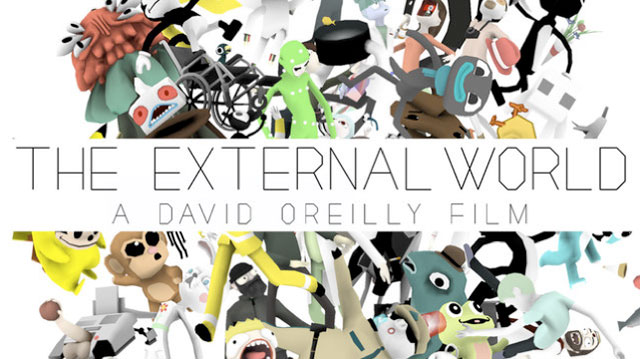
O'Reilly is an intriguing computer animator born in Ireland and currently working in Berlin, Germany.  I first came across his work with Please Say Something, which found success on the festival circuit (including the Cucalorus Film Festival here in Wilmington, NC).  The External World doesn't have the same range of emotional tones as Please Say Something, but it is a very funny series of sometimes violent and politically incorrect gags and comic scenes (note: this is "Not Safe for Work," as they say).  It is hard to sustain a 17-minute running time with such a loose structure, but there is enough absurd comic energy to keep the audience engaged as long as they are not offended (which they shouldn't be).  My favorite thread of action within these scenes involves a character who finds happiness after receiving a special prescription from his physician; the prescription doesn't really solve anything, but everything seems to be so much better.  The bleak world view and skepticism about any easy answers that pervades the film is balanced by the way it reminds us of the absurdity of what we might call suffering.


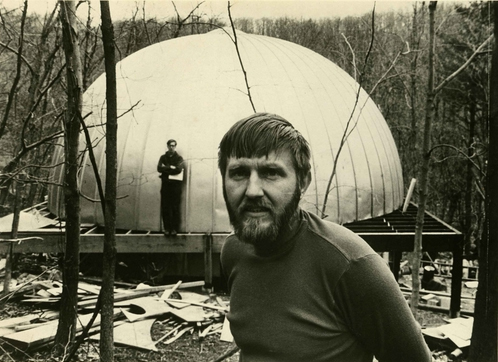
EAI Online Catalogue: A pioneer in the development of experimental film and live-action animation techniques, Stan VanDerBeek achieved widespread recognition in the American avant-garde cinema. An advocate of the application of a utopian fusion of art and technology, he began making films in 1955. In the 1960s, he produced theatrical, multimedia pieces and computer animation, often working in collaboration with Bell Telephone Laboratories. In the 1970s, he constructed a "Movie Drome" in Stony Point, New York, which was an audiovisual laboratory for the projection of film, dance, magic theater, sound and other visual effects. His multimedia experiments included movie murals, projection systems, planetarium events and the exploration of early computer graphics and image-processing systems.  UbuWeb Link.


I hope to highlight experimental filmmakers on Wednesdays as well as animators, and in coming weeks I hope to focus on more contemporary work.  But for now I will just encourage you to explore the work of Stan VanDerBeek, whose range of work went beyond the collage animations I will focus on here.  My personal favorites include Science Friction (1959), Achooo Mr. Kerrooschev (1960), and Breathdeath (1963).

I look forward to your thoughts on all of these films in the comments section.  --JLK